Enjoy.
Link.
Showing posts with label Science. Show all posts
Showing posts with label Science. Show all posts
Thursday, March 27, 2008

Tuesday, March 25, 2008
Estimating Neandertal and modern human divergence
Had to review and analyze a scientific article and also compare it to our text. Def. shoulda chosen an easier read...
In their recent paper, Close correspondence between quantitative—and molecular—genetic divergence times for Neandertals and modern humans, Timothy Weaver, Charles Roseman, and Chris Stringer present a divergence time estimator to estimate when Neandertals and modern humans last shared a randomly mating common ancestor (split time) based upon the input of neutrally evolving morphological measurements. Recent research, including their own, has shown genetic drift (not natural selection) may have produced many of the cranial differences found between Neandertal and modern humans. If this research is correct, then they can accurately estimate population genetic parameters much in the same way as estimates are made from DNA sequences, the only difference is that they use modern human and Neandertal cranial measurements to make their estimates. Using advanced statistical formulas employed in evolutionary quantitative genetics and on microsatellites to develop their divergence time estimator, the researchers then apply this estimator to 37 cranial measurements collected on 2,524 modern humans from 30 globally distributed populations and 20 Neandertal specimens and calculate that Neandertals and modern humans split ≈311,000 (95% C.I.: 182,000 to 466,000) or 435,000 (95% C.I.: 308,000 to 592,000) years ago. The time-span of divergence that these researchers produce is relatively aligned with dates derived from ancient Neandertal and extant human DNA-sequence (see Noonan and colleagues 2006). This correspondence, according to the researchers, greatly strengthens the neutral divergence explanation for the cranial-facial differences found between Neandertals and modern humans and weakens the adaptionist explanations of diversifying natural selection. Lastly, they state that their work shows that there is no conflict between molecules and morphology.
The research methods employed in this paper are very complex and there are a number of variables and equations that I do not fully understand, so they are hard to critique. However, I would say that one of the difficulties of adapting DNA sequence statistics to morphological measurements, in order to determine the effects of genetic drift, is that there a lot more shifting variables to account for—namely population size and fluctuations. According to John Hawks, “a model of phenotypic evolution by genetic drift requires an assumption about the effective size of the population (Ne). Weaver et al. (2008) assume a model of "mutation-drift equilibrium." This is an assumption that the effective population size has not changed over time in the populations under consideration -- in this case, the Neandertal and human populations back at least as far as their common ancestor.” Weaver and colleagues set the effective population sizes of Neandertals and modern humans over the past thousand years at 2700 individuals. This number seems contradictory to and much smaller than existing evidence of actual population size and fluctuations. Such a small number would obviously emphasize the role that genetic drift played, but may be incorrect. Also, using recent phenotypic and genetic divergences of modern humans to 'calibrate their clock' of phenotypic evolution is questionable, since modern effective population sizes are much larger today, than they were during the Middle Pleistocene—which raises a serious question of comparability of phenotypic divergences between the two periods.
_________________________________________
The article summarized above encompasses and synthesizes a number of topics and approaches referenced in our text book and advances and discredits some of the proposed explanations for variation (specifically cranial differences) found between Neandertal and modern humans. The researchers suggest that genetic drift, not natural selection, is largely responsible for many of the cranial differences found between Neandertals and modern humans. In chapter 13, our text book begins by elaborating on the environmental background of the Pleistocene period before it goes on to describe the Neandertal cranium. This is to emphasize the environmental impacts on the anatomical structure of the cranium, an adaptionist explanation. Our text references one opinion that “both the facial anatomy and the robust postcranial structure of Neandertals” according to Erik Trinkaus, of Washington University in St. Louis, are “adaptations to rigorous living in a cold climate” (p. 335). In an earlier paper (Weaver et al. 2006), the same researchers of the paper I referenced deemphasize these adaptionist explanations of natural selection and advance their own explanation: “isolation between Neandertal and modern human populations would have lead to cranial diversification by genetic drift (chance changes in the frequencies of alleles at genetic loci contributing to variation in cranial morphology).” Our book defines genetic drift as being “the random factor in evolution, it's a direct function of population size” (p.82). Our book also states that “drift occurs because the population is small” (p.82). Thus, the smaller the population size the greater genetic drift's influence is. The researchers do not, however, dismiss altogether the role played by natural selection on Neandertal and moder human craniums. They admit that the similarity in cranium size between Neandertal and modern humans was most likely heavily influenced by natural selection, but the subtle differences in shape found between the two craniums, they argue, are a result of genetic drift, not natural selection. In the paper the researchers also bring up neutral evolution, which is basically the idea that variation is random and unselective (in a Darwinian sense) and strongly influenced by genetic drift.
This paper, as has already been mentioned, uses a number of methods employed by population geneticists. In chapter 15 our book devotes a couple pages to this field. One name that pops up in both our text book and this article is the Hardy-Weinberg theory of genetic equilibrium. According to our text, “the Hardy-Weinberg theory of genetic equilibrium establishes a set of conditions in a population where no evolution occurs” (p.391). In the paper the researchers reference it to explain why there is a difference of a factor of two between the quantitative genetic and microsatellite forumals—basically, according to Hardy-Weinberg theory a gametic variance should be twice a zygotic variance. The Hardy-Weinberg theory is very useful because “by explicitly defining the genetic distribution that would be expected if no evolutionary change were occurring (that is, in equilibrium), we can compare the observed genetic distribution obtained in real human populations” (p.391). Thus, “if the observed frequencies differ from those of the expected model, we can then say that evolution is taking place at the locus in question. The alternative, of course, is that the observed and expected frequencies don't differ enough that we can confidently say evolution is occurring at a locus in a population” (p.391). By using and slightly adapting this strategy Weaver et al (2007) are able to determine whether genetic drift or natural selection are contributing more to the cranial differences found between Neandertals and modern humans.
The time span that the researcher's divergence time estimator produces is within the figures of recent research but slightly more recent than the dates suggested in our text from a 1997 report by Krings and colleagues who “hypothesized that the Neandertal lineage separated from our modern H. sapiens ancestors sometime between 690,000 and 550,000 ya” (p. 343). Before referencing this estimated divergence period our book explains the techniques used to produce these dates and determine the degree of genetic relatedness between species, which include: “extracting mitochondrial DNA (mtDNA), amplifying it through polymerase chain reaction, or PCR, and sequencing nucleotides in parts of the molecule” (p. 343). These techniques allow for more accurate estimates of time divergence which Weaver et al. (2008) can use to compare the accuracy of their own results to. Lastly, there has been a long and lively debate regarding the replacement of ancient Homo species with modern Homo. One hypothesis, the complete replacement model, which was developed by Bristish paleoanthropologists Christopher Stringer (one of the researchers in the paper) and Peter Andrews, “proposes that anatomically modern populations arose in Africa within the last 200,000 years and then migrated from Africa, completely replacing populations in Europe and Asia” (p.354). Another model, partial replacement, proposes that “some interbreeding occurred between emigrating Africans and resident premodern populations elsewhere” (p.356). In other words, the partial replacement model assumes that “no speciation event occurred, and all these hominids should be considered members of H. sapiens (p.356). Then, lastly, there's the regional continuity model, associated with Milford Wolpoff, which suggests that “local populations—not all, of course—in Europe, Asia, and Africa continued their indigenous evolutionary development from premodern Middle Pleistocene forms to anatomically modern humans” (p.356). The last two models are questionable for a number of reasons and the findings in the Weaver et al. (2008) paper support Stringer and Andrew's replacement model, since they show that phenotypic differences in cranial measurements can be used to trace back to the time in which these two species diverged.
______________________________________
The article I reviewed at first seemed extremely esoteric and beyond comprehension, and so it often felt like I was reading something that was written in an entirely different language. It required me to learn quite a bit about quantitative genetics, microsatellites, neutral evolution, genetic drift, and mutation-drift equilibrium—terms which I had no knowledge of, at all, before. Once I familiarized myself with these terms and the methods employed in the paper I was able to get a pretty good grip on the substance of what they are saying.
The researchers are suggesting that natural selection is not the only or even strongest influence on diversity (or differences found between species) and argue that genetic drift, in the case of cranial differences found between Neandertal and modern humans, appears to have played a much stronger role. More importantly, by using morphological cranium measurements and plugging it into their formulas to produce similar or overlapping dates with the ones derived from DNA sequencing Weaver et al. (2008) build a potential bridge between the molecular and morphology camps. The only problem that I would raise with their paper is my concern that their formulas do not accurately address true population sizes and fluctuations. Based on the evidence we have it seems Neandertal and modern human population sizes waxed and waned at incongruent intervals. If the population sizes dwindled to small numbers diversity diminishes and deleterious traits begin to emerge. The researchers assume the population size to be 2700 individuals, which as John Hawks puts it “is an astounding assumption.” A small effective population size, such as the one the researchers select, means that rapid evolution will occur by genetic drift. This small size, however, is disputed by other evidence. As John Hawks again points out:
“most other sets of genetic data indicate a long-term effective size of at least 10,000 for human populations -- four times larger than assumed in this study. All things being equal, this means that the rate of phenotypic evolution by genetic drift should be four times slower than assumed by Weaver et al. (2008). Some of this difference between real and assumed effective sizes may be washed out by their process of calibration -- their equations involve several unknowns that must be simultaneously estimated, and give a lot of wiggle-room to the results.”
The problem with statistical formulas that include these unknown variables is that they can be adjusted such that the results can be fine-tuned and any phenotypic difference can thus look like genetic drift.
Lastly, in their formula they use 37 cranial measurements collected on 2,524 modern humans from 30 globally distributed populations. Modern human populations have dramatically increased in size, so whether one can use these measurements to accurately measure the differences between modern human craniums and Neandertal to track their divergence seems to me questionable. Overall I thought the article was very interesting and I think the researchers are usefully adopting and synthesizing numerous methods from various fields which bring molecular research and morphology closer together, producing a much clearer and accurate picture of our past.
_______________________________
Weaver, T.D., Roseman, C.C., Stringer, C.B. (2008). Close correspondence between quantitative- and molecular-genetic divergence times for Neandertals and modern humans. Proceedings of the National Academy of Sciences DOI: 10.1073/pnas.0709079105
Saturday, March 22, 2008
Something isn't true...
until science says so:
After years of argument over the roles of factors like genius, sex and dumb luck, a new study shows that something entirely unexpected and considerably sudsier may be at play in determining the success or failure of scientists -- beer.Via NyTimes
According to the study, published in February in Oikos, a highly respected scientific journal, the more beer a scientist drinks, the less likely the scientist is to publish a paper or to have a paper cited by another researcher, a measure of a paper's quality and importance.
Monday, February 25, 2008
Science Tattoos
Carl Zimmer started a Flikr album a few months ago dedicated to science tattoos, and it turned out to be a huge success, so now he has a web page fully devoted to them. Check it out:
Link.

Link.

Sunday, February 24, 2008
Ode to the LHC
 Joel Achenbach has a great write-up in National Geographic on the Large Hadron Collider, the particle accelerator which scientists hope will uncover the Higgs Boson, the so called "God particle". The photos taken by Peter Ginter, which accompany the article, are truly stunning.
Link:
If you were to dig a hole 300 feet straight down from the center of the charming French village of Crozet, you'd pop into a setting that calls to mind the subterranean lair of one of those James Bond villains. A garishly lit tunnel ten feet in diameter curves away into the distance, interrupted every few miles by lofty chambers crammed with heavy steel structures, cables, pipes, wires, magnets, tubes, shafts, catwalks, and enigmatic gizmos.This technological netherworld is one very big scientific instrument, specifically, a particle accelerator-an atomic peashooter more powerful than any ever built. It's called the Large Hadron Collider, and its purpose is simple but ambitious: to crack the code of the physical world; to figure out what the universe is made of; in other words, to get to the very bottom of things.
Monday, February 4, 2008
Ruh Roh
It seems we men are no longer needed, which obviously means that we no longer have any excuse to be tolerated.
Via The Telegraph:
Via The Telegraph:
Sperm cells have been created from a female human embryo in a remarkable breakthrough that suggests it may be possible for lesbian couples to have their own biological children.
British scientists who had already coaxed male bone marrow cells to develop into primitive sperm cells have now repeated the feat with female embryonic stem cells.
The University of Newcastle team that has achieved the feat is now applying for permission to turn the bone marrow of a woman into sperm which, if successful, would make the method more practical than with embryonic cells.

Wednesday, January 16, 2008
The Smell of Attraction
The economist has an interesting article about an internet-based-dating site which offers the service of finding your next partner by finding a match that has the most different immune system from your own. I had never heard of Wedekind's study, it's pretty interesting.
In his original study Dr Wedekind recruited female volunteers to sniff men's three-day-old T-shirts and rate them for attractiveness. He then analysed the men's and women's DNA, looking in particular at the genes that build a part of the immune system known as the major histocompatability complex (MHC). Dr Wedekind knew, from studies on mice, that besides fending off infection, the MHC has a role in sexual attractiveness. It changes odours in ways the mice can detect (with mice, the odours are in the urine), and that detection is translated into preferences for particular mates. What is true for mice is often true for men, so he had a punt on the idea that the MHC might affect the smell of human sweat, as well.
It did. Women preferred T-shirts from men whose MHC was most different from their own. What was more, women with similar MHCs favoured the use of similar commercial perfumes. This suggests that the role of such perfumes may be to flag up the underlying body scent rather than mask it, as a more traditional view of the aesthetics of body odour might suggest.
Thursday, January 3, 2008

Bringing TOM to Monkeys
 The Smithsonian had a fairly interesting piece, profiling Laurie Santos, a psychologist at Yale, who studies rhesus macaques on the island of Cayo Santiago, just off the coast of Puerto Rico. Santos has created a number of interesting experiments that exploit the monkeys' natural tendency to steal in order to asses whether or not they have a theory of mind--that another agent (in this case us) has thoughts similar to them. It is an incredibly difficult thing to test for in monkeys, but I think Santos is on the right thinking track.
Anyways check out the piece by clicking here.
Trial 1: The experiment relies on one of the most predictable traits of rhesus monkeys: their tendency to steal food at every opportunity. Santos discovered this a few years ago when she and her colleagues were running experiments in cognition and tool use involving lemons, and frequently had to quit early because the animals stole all the fruit. The island's monkeys are supplied with food, of course, and they also forage, but to leave so much as a raisin unguarded is to invite larceny; the researchers eat their own lunches inside a locked cage of cyclone fencing.
The theory-of-mind experiment is designed to test whether the monkeys, who obsessively guard their own food, assume that people do the same. If so, Santos reasons, they should prefer to steal from people who are looking away. So Santos enlists Olivia Scheck and Katharine Jan, Yale student volunteers here for the month. They are dressed alike in blue slacks and white shirts to minimize any confounding effect from their appearance—although there are differences Santos cannot do anything about, because Olivia is several inches shorter than Katharine, and blond, where Katharine is dark-haired. In general, Santos has found, rhesus macaques prefer to steal from the shorter person, although top-ranking dominant males sometimes do the opposite, apparently just to show off.
Saturday, December 15, 2007
The Warping of Time
I can think of a number of incidents (well, usually accidents) where time itself seemed to slow down. Where something appeared inevitable (like an oncoming car about to make impact), but at the same time it seemed to take forever for that thing to get to the point of contact (the collision). I used to think that the brain just did this to help us make better judgments in life-threating situations, allowing us to avoid accidents because we felt as though we had the time to act. But according to a recent study this is not the case...
Via Livescience.com:
Via Livescience.com:
Instead, such time warping seems to be a trick played by one's memory. When a person is scared, a brain area called the amygdala becomes more active, laying down an extra set of memories that go along with those normally taken care of by other parts of the brain.
"In this way, frightening events are associated with richer and
denser memories," Eagleman explained. "And the more memory you have of an event, the longer you believe it took."
Eagleman added this illusion "is related to the phenomenon that time seems to speed up as you grow older. When you're a child, you lay down rich memories for all your experiences; when you're older, you've seen it all before and lay down fewer memories. Therefore, when a child looks back at the end of a summer, it seems to have lasted forever; adults think it zoomed by."
Friday, December 14, 2007
Greinacher Tube
I want one for Christmas...
George Johnson shows his Greinacher tube in action during last weekend's science Saturday segment of bloggingheads.tv (which had a recent re-design that looks very savvy indeed).
Oh and a Ruhmkoff coil would also be cool, another thing that Johnson already has...
Anyways in keeping with electricity theme I'll leave you guys with a few cool videos to check out of home made Tesla coils that people have built. Enjoy:
Video 1, Video 2, Video 3
Thursday, December 13, 2007
Revisiting Watson's Remarks
There's been a recent reemerging buzz on Watson's past remarks in various news columns, because Watson recently had his genome decoded which revelead that his DNA has "16 times the number of genes considered to be of African origin than the average white European does — about the same amount of African DNA that would show up if one great-grandparent were African, said Kari Stefansson, the chief executive of deCODE Genetics of Iceland, which did the analysis."
While the revelation is pretty silly in regard to Watson's erred remarks, it is pretty amazing that we are now starting to use people's decoded genome as damning evidence of hypocrisy. I am somewhat inclined to think this is a good thing, because I suspect that as more information is revealed by science about our genes, the more the folk-stereotypes--which are largely socially created--of race will, increasingly, be shelved amongst our past (I'll be nice and say) 'misinformed' beliefs. Or at least that's my hope. The evidence uncovered so far seems to favor my hope, but it certainly can be easily manipulated to fit into the observer's racial stereotypes. We'll just have to hope that scientists will be able to make vertiable statements about race that are denuded of their racist implications. We shouldn't ban scientists from making remarks about race, but we should certainly not let them off the hook when they make judgemental statements directed at a particular race, based on rather flimsy evidence (like, for instance, in Watson's case, IQ studies).
*See my past post on Watson's remarks for more info
On Race & Intelligence
Malcolm Gladwell has a good piece in the New Yorker on why, based on the research we have accumulated over the past few decades, we cannot make any truthful or accurate claims on a correlation between one's IQ and one's race.
The best way to understand why I.Q.s rise, Flynn argues, is to look at one of the most widely used I.Q. tests, the so-called WISC (for Wechsler Intelligence Scale for Children). The WISC is composed of ten subtests, each of which measures a different aspect of I.Q. Flynn points out that scores in some of the categories—those measuring general knowledge, say, or vocabulary or the ability to do basic arithmetic—have risen only modestly over time. The big gains on the WISC are largely in the category known as “similarities,” where you get questions such as “In what way are ‘dogs’ and ‘rabbits’ alike?” Today, we tend to give what, for the purposes of I.Q. tests, is the right answer: dogs and rabbits are both mammals. A nineteenth-century American would have said that “you use dogs to hunt rabbits.”Blogger over at Mindhacks explains why this is relevant to the debate:
[sic]
Flynn shows what happens when we recognize that I.Q. is not a freestanding number but a value attached to a specific time and a specific test. When an I.Q. test is created, he reminds us, it is calibrated or “normed” so that the test-takers in the fiftieth percentile—those exactly at the median—are assigned a score of 100. But since I.Q.s are always rising, the only way to keep that hundred-point benchmark is periodically to make the tests more difficult—to “renorm” them. The original WISC was normed in the late nineteen-forties. It was then renormed in the early nineteen-seventies, as the WISC-R; renormed a third time in the late eighties, as the WISC III; and renormed again a few years ago, as the WISC IV—with each version just a little harder than its predecessor. The notion that anyone “has” an I.Q. of a certain number, then, is meaningless unless you know which WISC he took, and when he took it, since there’s a substantial difference between getting a 130 on the WISC IV and getting a 130 on the much easier WISC.
IQ is designed so it always has a mean of 100 and a standard deviation of 15. However, during the past decades people have been scoring better on IQ tests, something known as the Flynn effect, meaning the new versions have been re-adjusted to make sure the mean stays at 100.
This is important, because it means that comparing IQ from the 1950s is not a far comparison to IQs from the 2000s, because they use tests with different standards.Some of the people who argued that certain races are more intelligent than others have failed to include these changes in their calculations, and, as Gladwell points out, when these are accounted for, many of these differences completely disappear.
Saturday, December 8, 2007
Dividing Lines: The Politics of Nature
I'm usually pretty good at being at least familiar with most of the topics that cause a stir amongst the blog-o-sphere and on the web, but I guess I've been so busy this past week with exams and papers that this just completely flew under my radar...
Stevenson fled the scene, but was later picked up by the cops, cuffed, read his rights, and thrown in jail.
Which is of course what has led to the huge debate that is currently being fumed online between bird lovers and cat lovers. From what I gather the feud seems to be even deeper and more divisive than the old cats vs. dogs debates.
I personally had always thought of cat people as being particularly strange, or I guess they prefer eccentric, but it seems like bird people are psychotic. Perhaps I just don't understand how many birds are killed each year (or perhaps day) by curiously malicous cats, so I'm not quite as enraged, but these people are clearly very passionate about protecting birds. And most bird lovers obviously see something similar to this picture when they think of cats:
 Science writers John Horgan and George Johnson weigh in on the issue on the most recent Science Saturday segment of bloggingheads.tv. John trills an alarmist call for all cats to be kept indoors at all times and spatted, whereas George purrs on the side of the cats, though he is largely neutral, but he feels that it is wrong to hold cats accountable for their actions because they are merely slaves to their natural/biological impulses which are not filtered through the same levels of conscious and moral reasoning that our actions are processed through (though in Stevenson's case, this is obviously debatable). In other words, when a tree falls on and kills a man, for instance, we usually don't hold the tree accountable for its actions, nor are we quick to call the cops, because we understand that the tree didn't mean to do it and couldn't have done otherwise. John counters arguing that it is our responsibility to ensure cats don't go out and maliciously kill birds for sport and play. Anyways I advise you to watch the clip, because John lays out a series of arguments to support the side of the birds. I personally favor George's argument that we should be more focused on the devastating affects that we humans have had on the birds' habitats and survival rates, instead of pointing all of the blame at cats (who we, after all, brought over to this continent in the first place).
Andrew Revkin had a post on his blog covering the debate. He actually quotes John Horgan's wife, Suzie Gilbert, in his post, since she's a writer and wild bird rehabilitator, who lives just down the street from Revkin.
Revkin finishes his post by asking: Whose side are you on?
I, personally, have yet to be persuaded either way. But feel free, if you are a strong proponent of one of these sides, to try and convince me otherwise.
As to the emotional question of which species I like more, I would probably come out in favor of birds. My dad has a cat named Hobbes, who I have to admit has improved my impression of cats, because before him, I was convinced that all cats were incredibly stupid creatures who had tricked everyone into thinking that they were smart simply because they were lazy and reflexive looking. I was also allergic, so that was another reason I didn't take much interest in them. On top of that this video accurately illustrates one of the most tangible reasons I hate cats, because Hobbes used to always find a way into my room and do this to me:
So yeah, birds are cool. Colorful, diverse, capable of imitating speech rather exceedingly, they perform collective behaviors that are mesmerizing, as was illustrated in an earlier post I had of starlings in flock, oh, and most importantly they can fly! Whereas cats, overall, are pretty unimpressive when you think about it...lazy, indifferent, and, what, can land on their feet? who cares...
(I have a feeling I will receive pecks on the head from the bird lovers about my earlier comments and claws and perhaps teeth from the cat lovers for the comments directly above. I say bring it).
Anyways whose side do you, my enormous readership, favor in this debate? The trilling birds or the Prring Cats? Discuss (and please try not to scratch or peck).
The NyTimes ran this article last Sunday describing a man by the name of Jim Stevenson, who lives in Gavelston, Texas. He apparently is an avid bird watcher and enthusiast and has a rather strong animosity towards cats. Thus the story begins:Stevenson said he tried to protect the birds by capturing the cat. He failed and returned home frustrated. Late that night, he worried the problem. “The American taxpayers spend millions of dollars to protect birds like piping plovers,” he said, “and yet here are these cats killing the birds, and nobody’s doing anything to stop it.”
The next morning, Stevenson decided to act. He loaded his .22 rifle in the van and took off for San Luis Pass. He spotted the same cat under the bridge. Stevenson put the animal in his sights and pulled the trigger.
“The cat dropped like a rock,” he said.
On the evening of Tuesday, Nov. 7, 2006, Stevenson took a break from watching the election returns to look at some birds at San Luis Pass, a ripply channel connecting Galveston Bay to the gulf. Stevenson parked his white Dodge van with “Galveston Ornithological Society” bannered on its side, near the end of the San Luis Pass bridge, a tollway that connects Galveston Island to Follets Island. He found a spot in the low grass-speckled dunes and waited. Soon enough, he saw a handful of piping plovers, a federally listed endangered species. Then he saw something else: a scraggly cat stalking the plovers. A colony of about a dozen feral cats had been sleeping under the bridge. The cats liked to wander into the dunes for the same reason Stevenson did: the birds.John Newland, a man in his sixties, described as 'quiet', working in the nearby tollbooth came running when he heard the later gunshot. Newland had frequently fed the cats under the bridge in the past and thought of them as his 'babies', causing him to chase after Stevenson shouting “I got you! . . . You quit shooting my cats!”
Stevenson fled the scene, but was later picked up by the cops, cuffed, read his rights, and thrown in jail.
Which is of course what has led to the huge debate that is currently being fumed online between bird lovers and cat lovers. From what I gather the feud seems to be even deeper and more divisive than the old cats vs. dogs debates.
I personally had always thought of cat people as being particularly strange, or I guess they prefer eccentric, but it seems like bird people are psychotic. Perhaps I just don't understand how many birds are killed each year (or perhaps day) by curiously malicous cats, so I'm not quite as enraged, but these people are clearly very passionate about protecting birds. And most bird lovers obviously see something similar to this picture when they think of cats:
 Science writers John Horgan and George Johnson weigh in on the issue on the most recent Science Saturday segment of bloggingheads.tv. John trills an alarmist call for all cats to be kept indoors at all times and spatted, whereas George purrs on the side of the cats, though he is largely neutral, but he feels that it is wrong to hold cats accountable for their actions because they are merely slaves to their natural/biological impulses which are not filtered through the same levels of conscious and moral reasoning that our actions are processed through (though in Stevenson's case, this is obviously debatable). In other words, when a tree falls on and kills a man, for instance, we usually don't hold the tree accountable for its actions, nor are we quick to call the cops, because we understand that the tree didn't mean to do it and couldn't have done otherwise. John counters arguing that it is our responsibility to ensure cats don't go out and maliciously kill birds for sport and play. Anyways I advise you to watch the clip, because John lays out a series of arguments to support the side of the birds. I personally favor George's argument that we should be more focused on the devastating affects that we humans have had on the birds' habitats and survival rates, instead of pointing all of the blame at cats (who we, after all, brought over to this continent in the first place).
Andrew Revkin had a post on his blog covering the debate. He actually quotes John Horgan's wife, Suzie Gilbert, in his post, since she's a writer and wild bird rehabilitator, who lives just down the street from Revkin.
“I don’t know how many people have brought me birds that their cats have ripped up, with the most horrendous injuries,” Ms. Gilbert told me. “And the people are, like, ‘Oh, well, it’s natural.’ Of course it’s not natural. Then they just excuse it, saying, ‘Little Mister Whiskers just wouldn’t be happy if he wasn’t outside.’ And I say, ‘Well, this little bird isn’t very happy now, either.’ ”The comments under his post are especially telling of what kind of people are on each side. I recommend you check it out.
Revkin finishes his post by asking: Whose side are you on?
I, personally, have yet to be persuaded either way. But feel free, if you are a strong proponent of one of these sides, to try and convince me otherwise.
As to the emotional question of which species I like more, I would probably come out in favor of birds. My dad has a cat named Hobbes, who I have to admit has improved my impression of cats, because before him, I was convinced that all cats were incredibly stupid creatures who had tricked everyone into thinking that they were smart simply because they were lazy and reflexive looking. I was also allergic, so that was another reason I didn't take much interest in them. On top of that this video accurately illustrates one of the most tangible reasons I hate cats, because Hobbes used to always find a way into my room and do this to me:
So yeah, birds are cool. Colorful, diverse, capable of imitating speech rather exceedingly, they perform collective behaviors that are mesmerizing, as was illustrated in an earlier post I had of starlings in flock, oh, and most importantly they can fly! Whereas cats, overall, are pretty unimpressive when you think about it...lazy, indifferent, and, what, can land on their feet? who cares...
(I have a feeling I will receive pecks on the head from the bird lovers about my earlier comments and claws and perhaps teeth from the cat lovers for the comments directly above. I say bring it).
Anyways whose side do you, my enormous readership, favor in this debate? The trilling birds or the Prring Cats? Discuss (and please try not to scratch or peck).
Wednesday, December 5, 2007
Intellectual Orgy Fest
 This years Beyond Belief Conference 2.0 has recently been made available for the general public to watch online. The guest list is phenomenal and I can only hope that more events like this happen in the near future (every Sunday would be ideal).
Anyways you can watch the thought provoking videos by clicking here. Enjoy!
Friday, November 30, 2007
Footology
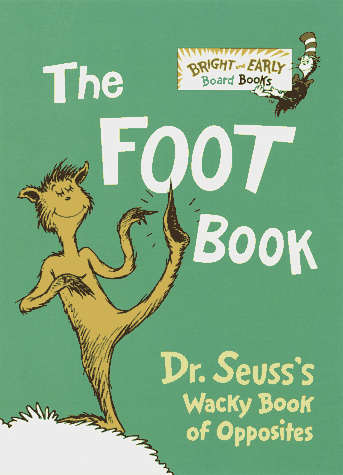 Biologist Robert Full at UC Berkley gave a recently posted talk at TED which is truly fascinating. He shows stunning videos of different types of feet and their functional capabilities, from the ant's sticky pad to the cockroach's spiny hook, from the geko's adhesive hairs to the basilisk lizard's paddling foot: feet which have all been biologically designed to promote momentum, overcome challenging terrain, climb vertical surfaces, and accomplish various other amazing tasks. Full and a number of other biologists and engineers have been inspired by these naturally designed feet and have attempted to synthesize these natural designs by applying them to the field of robotics and in so doing ended up creating a few of their own exciting designs. Anyways definitely check out his talk below:
Tuesday, November 27, 2007
Faith 'n' Science
I've been so busy with papers and exams lately that I really haven't had time to scan the news, which means that I've fallen behind the crest of reactions to new articles and items in the media that cause a buzz amongst the blogosphere, like Paul Davies article Taking Science on Faith in the NYtimes, which brings up the argument that scientists have the same faithy relationship with science that theists have towards their theology.
In science, a healthy skepticism is a professional necessity, whereas in religion, having belief without evidence is regarded as a virtue.
The problem with this neat separation into “non-overlapping magisteria,” as Stephen Jay Gould described science and religion, is that science has its own faith-based belief system. All science proceeds on the assumption that nature is ordered in a rational and intelligible way. You couldn’t be a scientist if you thought the universe was a meaningless jumble of odds and ends haphazardly juxtaposed. When physicists probe to a deeper level of subatomic structure, or astronomers extend the reach of their instruments, they expect to encounter additional elegant mathematical order. And so far this faith has been justified.
I personally think that Davies is pretty wrong headed in thinking that scientists base their claims on faith, but maybe Davies has a much looser definition of faith than I do. My defintion of faith is most accurately and eloquently described by Bertrand Russel who defines it as such:
"Faith" - the firm belief in something for which there is no evidence.
This is the very antithesis of science. The scientific claim or theory with the most cred on the scientific street (yes im trying to make scientists sound cooler) is the one which stands on the highest mountain of empirical data or evidence. What makes a claim or theory attractive in theology is usually directly correlated with the rewards it offers if embraced, or worse, the justification it provides if you want to target and torture a minority group (thou shalt not suffer a witch to live was at one point, the John 3:16 of today's world--popularly recited and referred to).
Anyways Edge posted several reactions criticizing Davies' thesis which are worth reading. Most of the responses seem to align with me any my definition of faith:
1. Contrary to Davies' assertion, science is not based on "faith" that physical laws will apply forever, or in different places in the Universe. This is an observation—an observation that has not been contradicted by any other data. Davies is completely off base when claiming that "to be a scientist, you had to have faith that the universe is governed by dependable, immutable, absolute, universal, mathematical laws of an unspecified origin. You've got to believe that these laws won't fail, that we won't wake up tomorrow to find heat flowing from cold to hot, or the speed of light changing by the hour. " This is not a matter of faith. It's a matter of experience. In contrast, the tenets of religion are truly based on faith, since there is no empirical data to support them.
2. Davies claims that the "faith" of science is based on something outside the universe, like "an unexplained set of physical laws. " The lack of a current explanation for why the laws are as they are, however, does not make physics a faith. It only means that we don't have the answer. Indeed, Davies thinks we might be able to come up with an answer, one that does not involve supernatural intervention. So what, exactly, are scientists taking on faith here? What do we believe to be true without any evidence? I don't get it. -Jerry Coyne
Tuesday, November 20, 2007
Competitively Selfish
Blogger over at Cognitive Daily has an interesting post up, which includes interactive voting tabs that you can click on, looking at reciprocity scenarios or games and what decisions people tend to make under certain conditions. Anyways click here to read more.
Tuesday, November 13, 2007
The Swarm Mentality
 I just noticed that Carl Zimmer has a very interesting article (found here) in the NYtimes Science section on the study of swarms, schools, gaggles, and flocks.
Snip-bit:
By studying army ants — as well as birds, fish, locusts and other swarming animals — Dr. Couzin and his colleagues are starting to discover simple rules that allow swarms to work so well. Those rules allow thousands of relatively simple animals to form a collective brain able to make decisions and move like a single organism.
Deciphering those rules is a big challenge, however, because the behavior of swarms emerges unpredictably from the actions of thousands or millions of individuals
One of my favorite spectacles of nature, which I witnessed once while in England, is the majestically mesmerizing sight of starlings in flock. (I usually use them as a metaphor when trying to explain/convince people that individual parts, collectively, can create extroadinarily complex looking wholes)
Here's a video on youtube of starlings in flight (which, as Dave Barry would say, would be a great name for a rock band). Enjoy:
Wednesday, November 7, 2007
The Superbowl of Particle Physics

There's a fantastic post up on Cosmic Variance on the Higgs boson, which is what scientists are hoping to discover after spending billions of dollars on the LHC at CERN, granted of course a black hole isn't created that inhales the planet...(just kidding according to Hawkings' formulas that is improbable, and if you can't trust him who can you trust).
I wish I could say more on this topic but I have a huge paper due tomorrow that I do not have the luxury of time to neglect.
You can find a peerty slide show of images of the Collider in this NYtimes article.
I wish I could say more on this topic but I have a huge paper due tomorrow that I do not have the luxury of time to neglect.
You can find a peerty slide show of images of the Collider in this NYtimes article.
Subscribe to:
Posts (Atom)

